When employers think about workplace medicals, many automatically assume that only a doctor can perform these assessments. Yet occupational health services in South Africa involve a range of qualified healthcare professionals, each with a specific role to play in protecting employee health and supporting workplace compliance.
As occupational health requirements continue to evolve, many employers are asking an important question: Can Occupational Health Nurses legally conduct workplace medicals in South Africa, and what does this mean for workplace compliance?
Understanding who may perform workplace medicals, issue certificates of fitness, and participate in medical surveillance programmes is essential for maintaining compliance with occupational health legislation while ensuring employees are fit to perform their duties safely.
Why Workplace Medicals Matter
Workplace medicals are far more than an administrative requirement. They help employers identify potential health risks, assess whether employees are medically fit for specific job functions, and support the prevention of work-related injuries and illnesses.
In industries where employees work at heights, operate machinery, drive vehicles, or are exposed to workplace hazards, fitness-for-work assessments form an important part of risk management. These assessments help ensure that employees can safely perform their duties without placing themselves, colleagues, or members of the public at risk.
Effective occupational health programmes also allow potential health concerns to be identified early, enabling employers to take proactive steps before minor issues become significant workplace problems.
For employers, workplace medicals are not only about employee health and safety. They are also an important part of demonstrating due diligence and meeting occupational health obligations under the Occupational Health and Safety Act.
The Role of Occupational Health Nurses
Occupational Health Nurse Specialists play a vital role in workplace health management. Their responsibilities extend beyond conducting medical assessments and include health monitoring, medical screening and surveillance, workplace risk awareness, health promotion, and supporting employers in meeting their occupational health obligations.
Because they work closely with both employers and employees, Occupational Health Nurses are often at the forefront of identifying workplace health concerns and assisting organisations in maintaining healthier and safer working environments.
Their specialised training equips them with knowledge of occupational diseases, workplace hazards, employee wellbeing, fitness-for-work requirements, and the practical application of occupational health legislation.
This combination of clinical expertise and workplace knowledge makes Occupational Health Nurses an important part of modern occupational health services.
So, Can Occupational Health Nurses Conduct Workplace Medicals?
In many cases, yes.
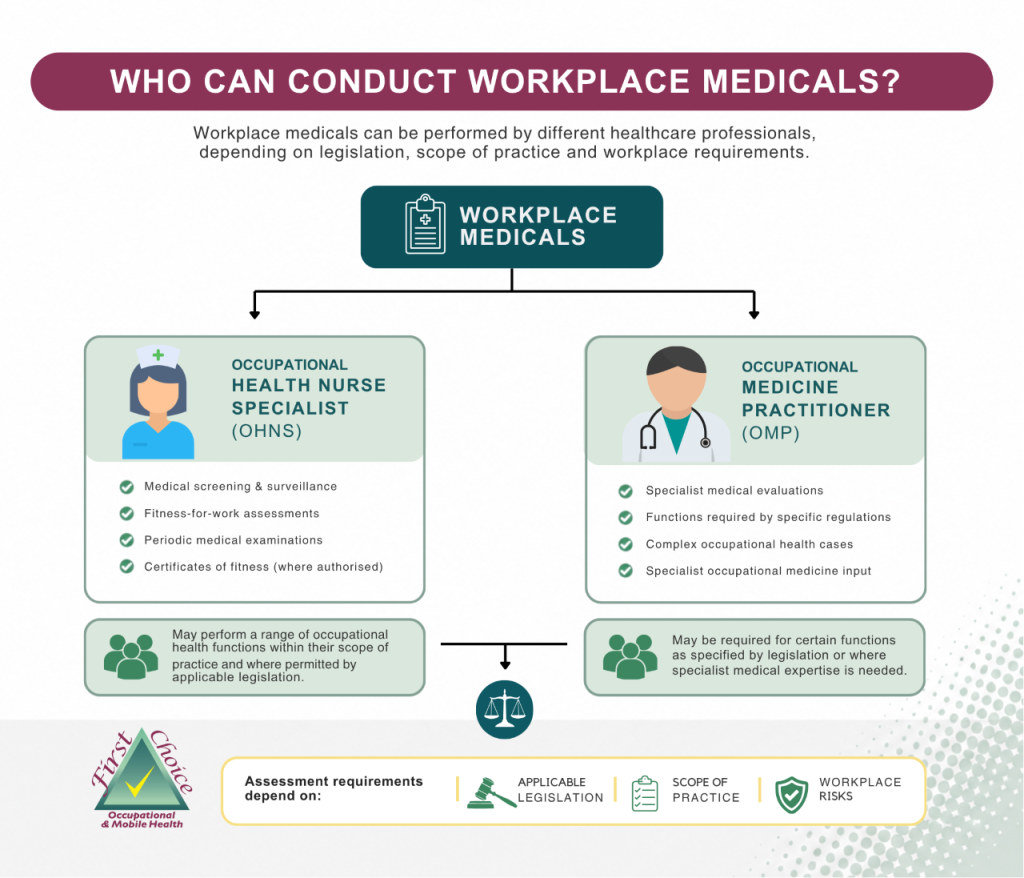
Occupational Health Nurse Specialists who hold recognised occupational health qualifications may perform a range of occupational health functions within their professional scope of practice and where permitted by applicable legislation. Depending on the specific workplace requirements and legislative provisions, these functions may include occupational health medical screening and surveillance, fitness-for-work assessments, periodic medical examinations, pre-placement or pre-employment assessments, exit medical assessments and the issuing of certificates of fitness where authorised.
However, employers should be aware that not every occupational health function can automatically be performed by an Occupational Health Nurse Specialist.
Certain regulations may specifically require the involvement of an Occupational Medicine Practitioner or another designated healthcare professional. The exact requirements will depend on the nature of the workplace hazards, the type of work being performed, and the legislation that applies to that particular environment.
For this reason, it is important to ensure that workplace medicals are conducted by appropriately qualified professionals who understand both occupational health requirements and the legal framework governing workplace assessments.
Understanding Fitness-for-Work Assessments
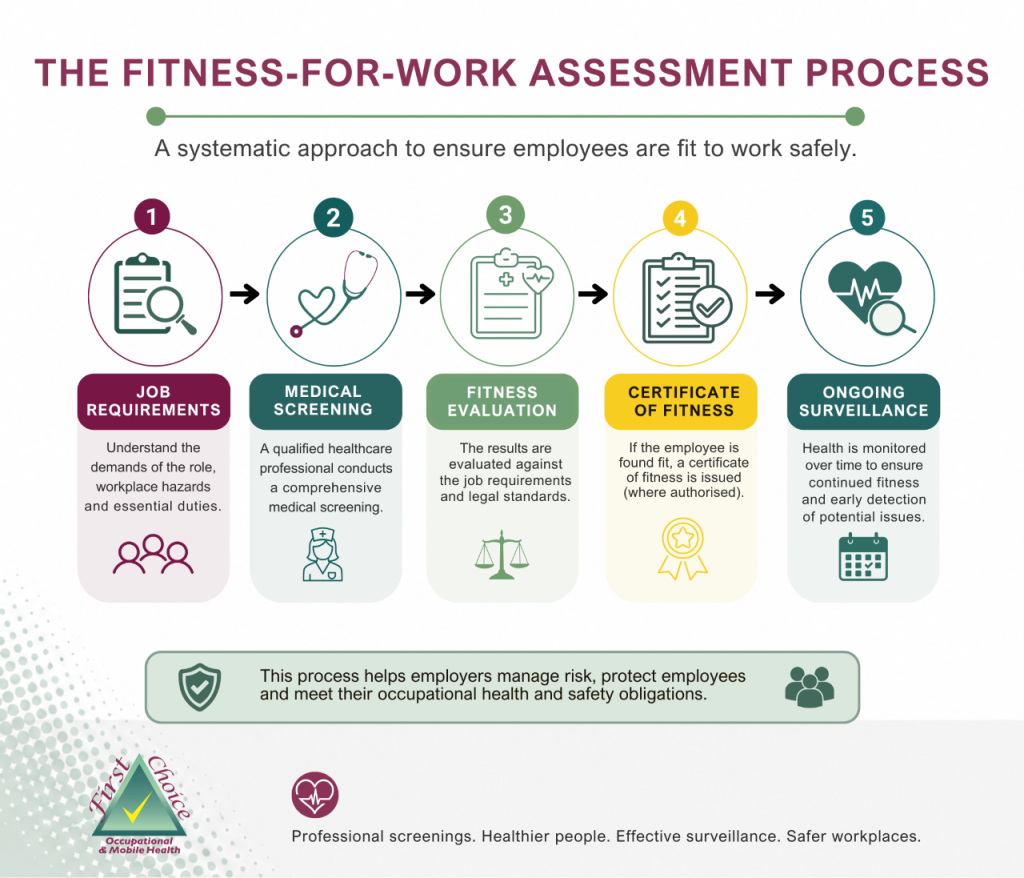
One of the most common workplace medicals performed within occupational health programmes is the fitness-for-work assessment.
The purpose of a fitness-for-work assessment is to determine whether an employee can safely perform the essential functions of a specific job. These assessments are not designed to exclude employees unnecessarily but rather to ensure that workplace risks are properly managed.
Consider an employee whose role involves working at heights, operating heavy equipment, or driving commercial vehicles. Even a seemingly minor health condition could affect their ability to perform these duties safely. A fitness-for-work assessment helps identify potential concerns and provides employers with valuable information regarding workplace safety.
Where appropriate, the assessment may result in the issuing of a certificate of fitness, confirming that the employee has been medically assessed for the work they are required to perform.
The Importance of Medical Surveillance
Medical surveillance is another key component of occupational health management.
Employees who are exposed to specific workplace hazards may require ongoing health monitoring as part of a structured medical surveillance programme. The purpose of these programmes is to identify potential health effects associated with workplace exposures before they develop into more serious occupational illnesses.
Examples of workplace hazards that may require medical surveillance include, but is not limited to:
- Workplace noise exposure above the action limit
- Hazardous chemical exposure
- Respiratory hazards
- Physically demanding work environments
- Repetitive tasks that may contribute to musculoskeletal disorders
By monitoring employee health over time, employers can better protect their workforce while demonstrating a commitment to occupational health and safety.
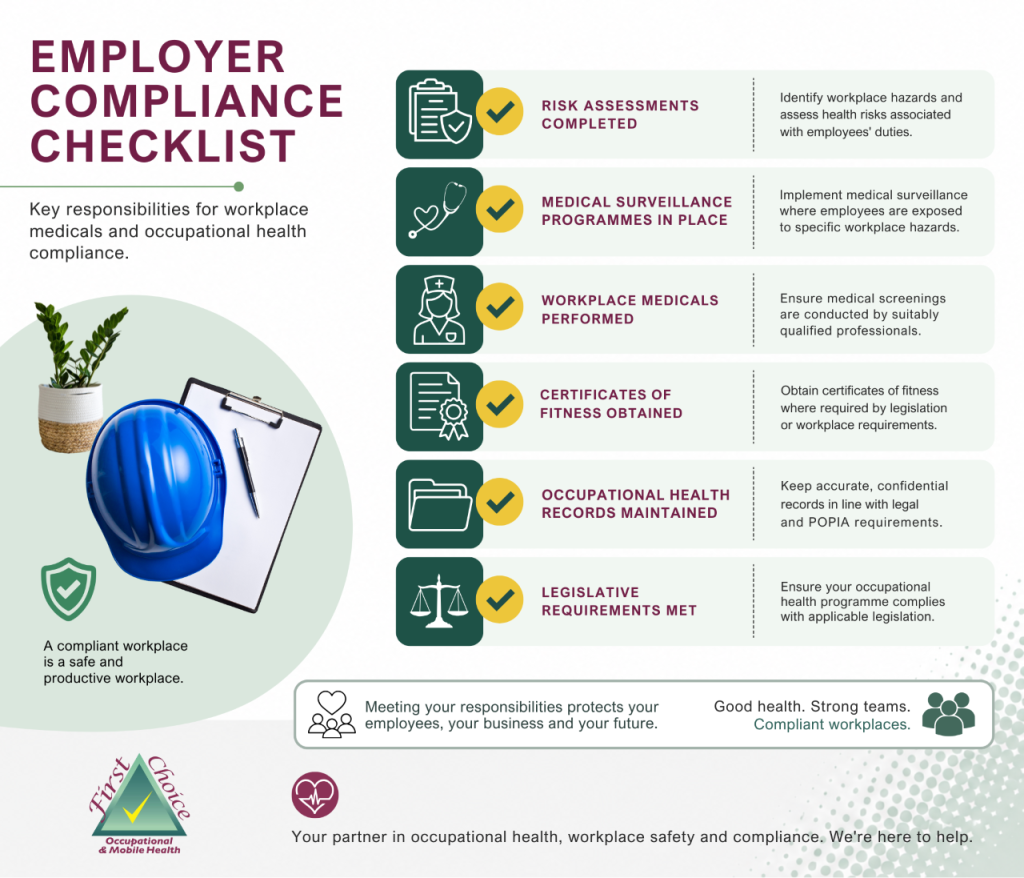
Employer Responsibilities
While qualified occupational health professionals play an important role in workplace medicals, employers remain responsible for ensuring that occupational health programmes comply with applicable legislation.
This includes ensuring that:
- Appropriate risk assessments have been conducted
- Medical surveillance programmes are implemented where required
- Workplace medicals are performed by suitably qualified professionals
- Certificates of fitness are obtained when necessary
- Occupational health records are maintained in accordance with legal requirements
Employers who fail to meet these obligations may expose their organisations to unnecessary legal, operational, and safety risks.
Choosing the Right Occupational Health Partner
Selecting an occupational health provider should involve more than simply booking workplace medicals.
Employers should work with providers who understand occupational health legislation, workplace hazards, medical surveillance requirements, and the responsibilities associated with fitness-for-work assessments.
An experienced occupational health team can help businesses navigate compliance requirements while ensuring employees receive professional and appropriate occupational health services.
Conclusion
The question of whether Occupational Health Nurses can legally conduct workplace medicals in South Africa is often surrounded by misunderstanding. In practice, appropriately qualified Occupational Health Nurse Specialists play an important role in occupational health services and may perform workplace medicals, fitness-for-work assessments, medical surveillance activities, and issue certificates of fitness where permitted by applicable legislation, professional scope of practice, and workplace-specific requirements.
For employers, the key consideration is not simply who performs the assessment, but whether the assessment is being conducted by a suitably qualified professional in accordance with occupational health requirements.
When workplace medicals form part of a well-managed occupational health programme, they help protect employers and employees, support compliance, reduce workplace risks, and contribute to a healthier and more productive workforce.
Need assistance with workplace medicals, medical surveillance, or occupational health compliance? Contact First Choice Occupational & Mobile Health to discuss how our team can support your organisation’s occupational health requirements.