How everyday lifestyle choices can support better health and long-term wellbeing.
“You have high blood pressure.”
“Your blood sugar levels indicate Type 2 diabetes.”
Few people expect to hear these words.
Whether the diagnosis comes during a routine occupational medical examination, an annual wellness screening or a visit to your doctor, it’s completely natural to feel uncertain about what comes next. It’s often followed by a flood of questions.
Will I always need medication?
Will I have to give up all the foods I enjoy?
Can I still live a normal life?
The good news is that a diagnosis is not the end of living well.
For many people, it’s the beginning of understanding their health more clearly and taking practical steps that can improve both their quality of life and long-term wellbeing.
Millions of people successfully manage hypertension and Type 2 diabetes every day. While these conditions are often lifelong, they don’t have to prevent you from enjoying your family, your career or the activities that matter most.
Managing these conditions isn’t about changing everything overnight. It’s about understanding which everyday habits have the greatest influence on your health and making small, consistent choices that work alongside your treatment to reduce the risk of future complications.
Why Early Detection Matters
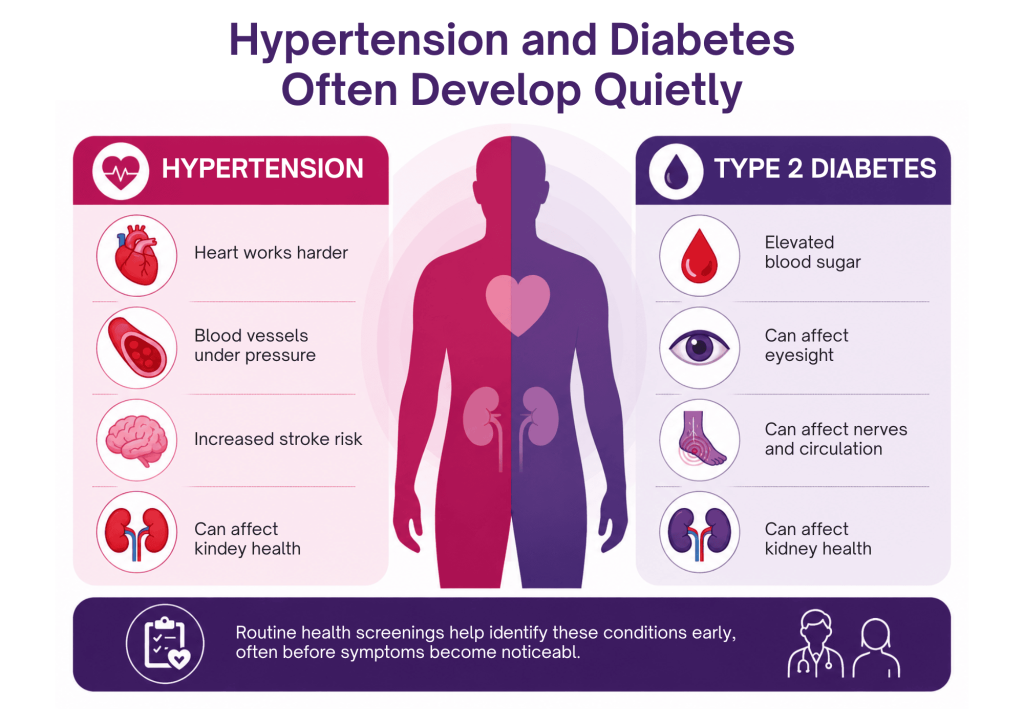
One of the biggest challenges with hypertension and Type 2 diabetes is that they often develop gradually. Unlike many other health conditions, they don’t always cause pain or obvious symptoms during the early stages.
You may continue going to work, spending time with your family and following your normal routine without realising that your heart, blood vessels or blood sugar levels are under increasing strain.
Over time, high blood pressure can damage blood vessels and place additional strain on the heart, increasing the risk of heart disease, stroke and kidney disease. Similarly, persistently high blood sugar levels can affect the eyes, kidneys, nerves and circulation if diabetes isn’t managed effectively.
Because these conditions often develop silently, many people only discover them during a routine medical examination or workplace wellness screening.
Rather than being something to fear, early detection should be seen as an opportunity. The sooner hypertension or Type 2 diabetes is identified, the sooner you can work with your healthcare provider to develop a personalised treatment plan and make lifestyle changes that help protect your long-term health.
💡 Did You Know?
High blood pressure is often called the “silent killer” because many people have no symptoms until serious complications develop. That’s why routine blood pressure and blood glucose screenings are so important—they can detect potential health concerns long before you begin to feel unwell.
Your Health Is Influenced by More Than Medication
Receiving a diagnosis often leads people to focus on one thing—medication.
Medication plays an important role in managing hypertension and Type 2 diabetes—but it’s only one part of the bigger picture. It works best when it’s supported by healthy daily habits that help your body function at its best.
Nutritious food provides the building blocks your body needs to stay healthy. Regular physical activity strengthens your heart and improves circulation. Quality sleep gives your body time to recover and repair, while managing stress supports both your physical and emotional wellbeing. Routine health assessments help identify changes early, allowing you and your healthcare provider to make informed decisions about your care.
Together, these habits work alongside your treatment to support better blood pressure control, healthier blood sugar levels and improved long-term wellbeing.
Perhaps that’s one of the most encouraging things about living with hypertension or diabetes. While you can’t change your diagnosis, you can influence many of the everyday factors that help you manage it successfully.
The Power of Consistency
Two people receive exactly the same diagnosis on the same day. Both are prescribed the same medication and receive the same advice from their healthcare provider.
One believes the tablets alone will solve the problem and continues living much as they always have.
The other also takes their medication but begins making small, realistic lifestyle changes. They replace sugary drinks with water more often, prepare more meals at home, take a walk after dinner a few evenings each week and make time for better sleep.
Neither person’s life changes overnight, and neither becomes the picture of perfect health. But after a year, their health may look very different.
The difference isn’t luck—it’s consistency.
The habits we practise most often are the ones that shape our long-term health. The same daily choices that can gradually contribute to hypertension or diabetes can, over time, become the very habits that help us manage these conditions more effectively.
Not chasing perfection.
Not living with unnecessary restrictions.
But understanding how everyday choices can support your health, improve your wellbeing and help you live well with hypertension or Type 2 diabetes.
You don't have to be perfect to improve your health—you simply have to keep making choices that support your wellbeing.
The Good News Is That You Have More Control Than You May Think
Although hypertension and Type 2 diabetes are lifelong conditions for many people, there are many aspects of your health that you can influence.
The food you eat, how active you are, the quality of your sleep, how you manage stress and attending regular health assessments all play an important role in supporting your treatment and protecting your long-term health.
The following lifestyle habits can help you manage these conditions more effectively.
Healthy Habits Are Built One Choice at a Time
Changing lifelong habits can feel overwhelming at first. Many people believe they need to change everything overnight to improve their health, but lasting success doesn’t happen through dramatic changes. It happens through small, realistic choices that become part of everyday life.
Rather than trying to change everything at once, focus on making one healthy choice at a time. Choosing water instead of a sugary drink, preparing a balanced meal, taking a short walk after dinner or getting to bed a little earlier may seem like small decisions, but when repeated consistently, they become powerful habits.
Over time, these choices require less effort because they become part of your lifestyle rather than something you feel forced to do.
Eat to Support Your Health
The food you eat plays an important role in managing both hypertension and Type 2 diabetes. While medication helps control these conditions, everyday food choices can also influence your blood pressure, blood sugar levels, cholesterol, energy levels and overall wellbeing.
Rather than focusing on foods you should never eat again, think about choosing nourishing foods more often and limiting those that can make it harder to manage your condition.
Living well is about progress, not perfection. It’s about building a balanced pattern of eating that you can maintain over the long term.
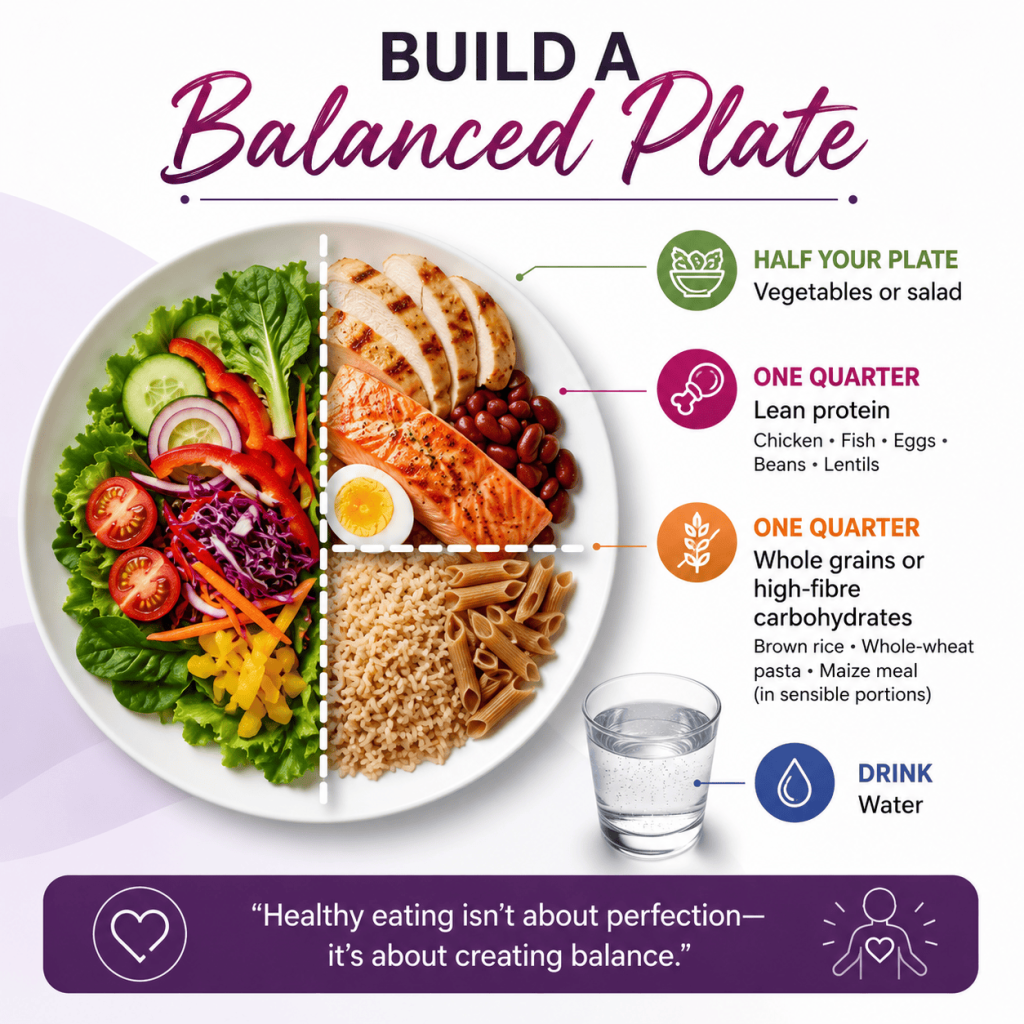
Build Your Plate Around These Foods
These foods provide important nutrients, fibre and healthy fats that help support heart health, improve blood sugar management and promote overall wellbeing.
- 🥦 Vegetables – Aim to fill at least half your plate with a variety of colourful vegetables or salad.
- 🍎 Fruit – Fresh fruit provides vitamins, minerals and fibre. Enjoy it in sensible portions rather than as fruit juice.
- 🌾 Whole grains – Foods such as oats, brown rice, whole-wheat bread and whole-wheat pasta provide more fibre and help you feel fuller for longer.
- 🐟 Fish – Especially oily fish like pilchards, sardines or salmon, which contain heart-healthy omega-3 fats.
- 🍗 Lean protein – Skinless chicken, eggs and lean cuts of meat help maintain muscle health without adding unnecessary saturated fat.
- 🫘 Beans and lentils – An affordable source of plant protein and fibre that can help support healthy blood sugar levels.
- 🥜 Unsalted nuts and seeds – Enjoy in moderation as a nutritious snack that contains healthy fats.
- 💧 Water – Make water your drink of choice and stay well hydrated throughout the day.
Enjoy Less Often
These foods don’t need to be avoided completely, but eating them less often can help improve blood pressure control, support healthier blood sugar levels and reduce your risk of long-term complications.
- 🧂 Foods high in salt (sodium) – Processed meats, packet soups, stock cubes, salty snacks and many convenience meals can contribute to high blood pressure.
- 🥤 Sugary drinks – Soft drinks, energy drinks and sweetened fruit juices can cause rapid increases in blood sugar and add unnecessary calories.
- 🍟 Fast foods and fried foods – Often high in salt, unhealthy fats and kilojoules while providing limited nutritional value.
- 🥓 Processed meats – Bacon, polony, sausages and similar processed products are often high in sodium and saturated fat.
- 🍰 Cakes, sweets and pastries – Best enjoyed occasionally rather than as everyday snacks because they’re typically high in added sugar and unhealthy fats.
- 🍞 Refined carbohydrates – Foods such as white bread, sugary breakfast cereals and many baked goods are lower in fibre and may cause blood sugar levels to rise more quickly.
Two Simple Tips That Can Make a Big Difference
🏷 Read Food Labels
Many packaged foods contain hidden amounts of sodium, added sugars and saturated fat. Taking a moment to compare labels can help you make healthier choices without changing the foods you enjoy completely.
🚶 Take a Short Walk After Meals
A gentle 10–15 minute walk after a meal is an easy way to include more physical activity in your day. Regular movement supports heart health and may also help your body manage blood sugar more effectively.
Healthy Eating FAQs
Can I still eat fruit?
Yes. Fresh fruit provides important vitamins, minerals and fibre and can form part of a balanced diet. Because fruit contains natural sugars, it’s generally best enjoyed in sensible portions rather than as fruit juice. Your healthcare provider or dietitian can advise what is most appropriate for your individual needs.
Can I still enjoy a braai?
Yes. A braai can still be part of a healthy lifestyle. Choose leaner cuts of meat, fill at least half your plate with salad or vegetables, go easy on creamy side dishes and enjoy treats in moderation.
Can I still drink coffee?
For many people, moderate coffee consumption can be part of a healthy lifestyle. However, avoid adding large amounts of sugar or cream, and speak to your healthcare provider if caffeine affects your blood pressure or interacts with your treatment.
Can I still eat potatoes?
Yes. Potatoes can be included as part of a balanced meal. Portion size and preparation matter—boiled, baked or roasted potatoes are generally healthier choices than chips or deep-fried potatoes. Pairing potatoes with vegetables and lean protein can also help create a more balanced meal.
💡 Did You Know?
Healthy eating doesn’t have to be expensive. Seasonal vegetables, beans, lentils, oats, eggs and pilchards are all affordable foods that can form part of a balanced, nutritious diet.
Your Heart Was Designed to Keep Moving
Your heart is one of the hardest-working muscles in your body. It beats around the clock, every day of your life, without taking a break. Like every other muscle, it becomes stronger and more efficient when it’s used regularly.
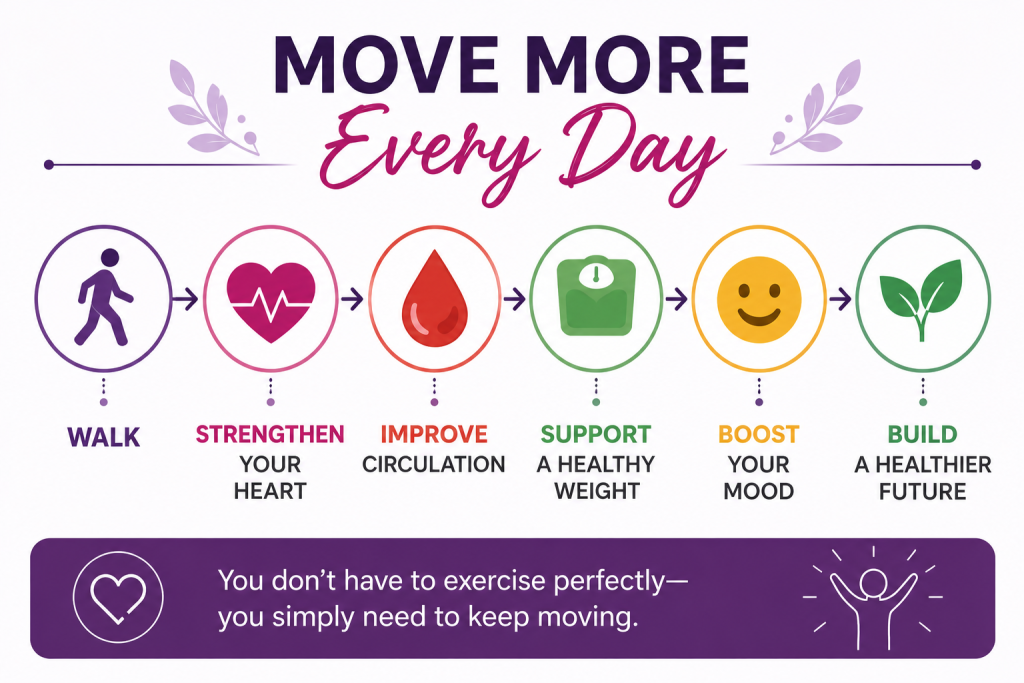
That’s one of the reasons physical activity plays such an important role in managing both hypertension and Type 2 diabetes. Regular movement improves circulation, helps lower blood pressure, supports your body’s ability to use insulin more effectively and contributes to maintaining a healthy weight.
Fortunately, you don’t need an expensive gym membership or a complicated fitness programme to experience these benefits. The best form of exercise is the one you enjoy and can continue doing consistently.
Whether it’s walking the dog, working in the garden, dancing in your lounge, playing with your children or grandchildren, parking a little further from the entrance or choosing the stairs instead of the lift, every opportunity to move contributes to a healthier heart and better overall wellbeing.
Health experts recommend aiming for at least 150 minutes of moderate physical activity each week, which is approximately 30 minutes on most days. If that feels overwhelming, don’t be discouraged. Start where you are and build gradually.
A ten-minute walk today may seem like a small step, but it’s a positive investment in your health—and every step forward is a step in the right direction.
Looking Beyond Food and Exercise
By now, you’ve seen how healthy eating and regular physical activity can support better blood pressure and blood sugar management. However, these aren’t the only lifestyle habits that influence your health.
Sleep, stress, smoking, alcohol and regular health monitoring also play an important role in helping your body recover, function effectively and reduce the risk of long-term complications. Let’s take a closer look at each of these.
Sleep Is One of Your Body’s Best Recovery Tools
Most of us know how we feel after a poor night’s sleep. We wake up feeling tired, less patient and finding it harder to concentrate. It’s also common to crave sugary foods or rely on extra cups of coffee just to get through the day.
What many people don’t realise is that poor sleep affects far more than our energy levels.
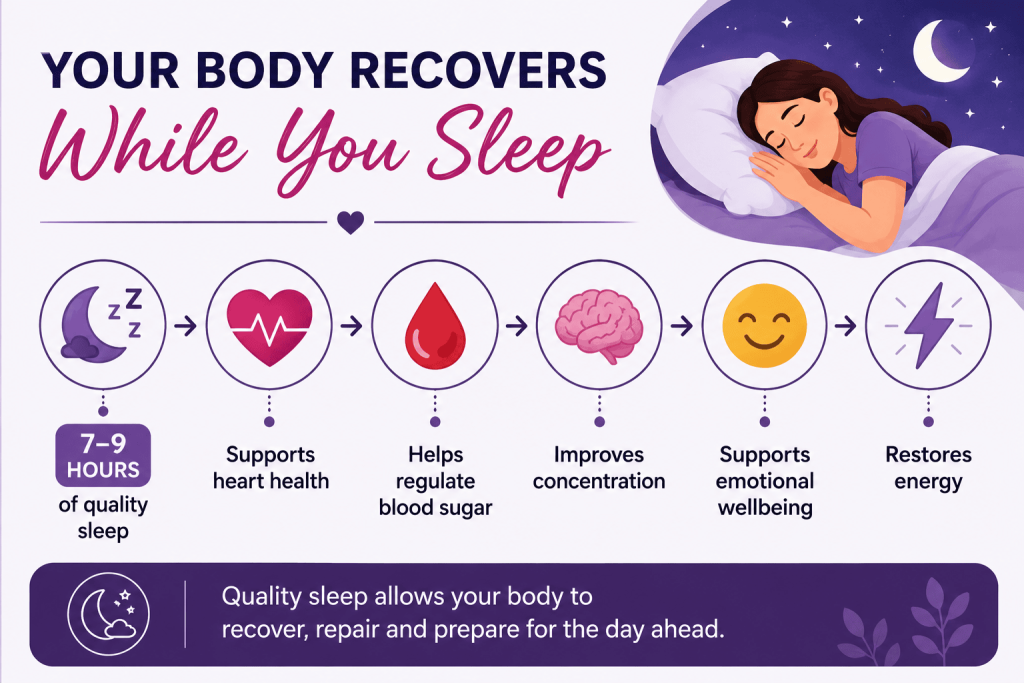
While you’re asleep, your body is busy repairing tissues, regulating hormones and giving your heart and blood vessels time to recover from the demands of the day. Consistently getting too little sleep can make it more difficult to manage blood pressure, regulate blood sugar levels and maintain a healthy weight.
For most adults, seven to nine hours of quality sleep each night is recommended. While everyone’s routine is different, a few simple habits can help improve both the quantity and quality of your sleep:
- Keep a regular bedtime and wake-up time, even on weekends.
- Reduce screen time before going to bed.
- Limit caffeine later in the day.
- Create a cool, quiet and comfortable sleeping environment.
Good sleep isn’t simply about feeling refreshed the next morning. It’s an essential part of supporting your overall health and managing chronic conditions such as hypertension and Type 2 diabetes.
Looking After Your Mind Helps Protect Your Body
Stress is something we all experience. Whether it’s meeting work deadlines, managing family responsibilities, dealing with financial pressures or coping with unexpected life events, periods of stress are a normal part of everyday life.
The challenge isn’t experiencing stress from time to time—it’s when stress becomes constant.
When you’re under stress, your body releases hormones that temporarily increase your heart rate, blood pressure and blood sugar levels. This natural response helps you deal with short-term challenges, but it isn’t designed to remain switched on all the time.
Over time, ongoing stress can make hypertension and Type 2 diabetes more difficult to manage. It may also affect your sleep, appetite, energy levels and motivation to stay physically active, making it even harder to maintain healthy lifestyle habits.
The good news is that managing stress doesn’t require complicated techniques. For some people, it may be taking a walk around the block, spending time in the garden or reading a good book. Others may find comfort in prayer, mindfulness, listening to music or talking to someone they trust.
The goal isn’t to eliminate every source of stress—that simply isn’t realistic. Instead, it’s about finding healthy ways to manage stress so it doesn’t begin to affect your physical and emotional wellbeing.
💡 Did You Know?
Looking after your mental wellbeing is just as important as looking after your physical health. A healthy mind helps support a healthy body.
Smoking and Alcohol: Every Positive Choice Counts
If you smoke, stopping is one of the most important decisions you can make for your health.
Smoking damages blood vessels, reduces circulation and forces your heart to work harder. For people living with hypertension or Type 2 diabetes, it significantly increases the risk of heart disease, stroke and other serious health complications.
Your body begins to recover surprisingly quickly after you stop smoking. Circulation starts to improve, your heart doesn’t have to work as hard and, over time, your risk of many smoking-related diseases begins to decrease.
Alcohol also deserves careful consideration. Drinking excessive amounts of alcohol can raise blood pressure, affect blood sugar management and interfere with certain medications. If you choose to drink alcohol, do so in moderation and speak to your healthcare provider if you’re unsure how alcohol may affect your condition or treatment.
Healthy living isn’t about expecting perfection from yourself. It’s about making informed choices that give your body the best opportunity to stay healthy, both now and in the future.
Know Your Numbers Before They Become Problems
One of the most important parts of managing hypertension and Type 2 diabetes is understanding what your health measurements are telling you.
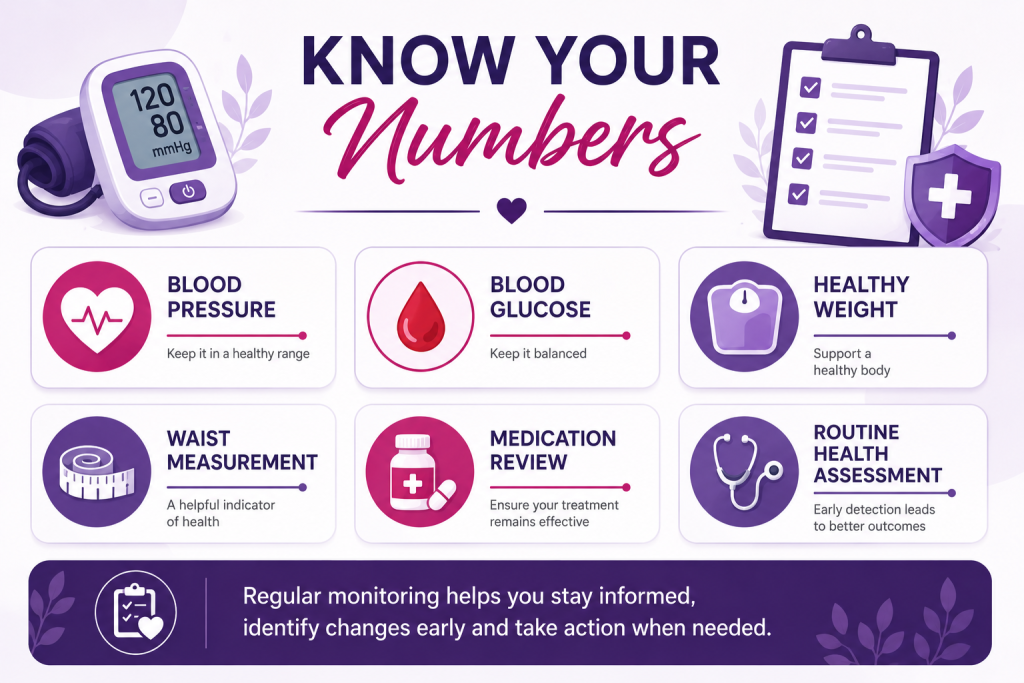
Blood pressure readings, blood glucose levels and routine health assessments provide valuable information about how your body is responding to treatment and healthy lifestyle changes. They help you and your healthcare provider monitor your progress and identify potential concerns before they develop into more serious complications.
One of the challenges with both hypertension and Type 2 diabetes is that they often don’t cause obvious symptoms in their early stages. Many people with high blood pressure feel perfectly well, even when their readings are significantly elevated, while blood glucose levels can remain high without causing noticeable warning signs.
That’s why regular monitoring is so important. It provides the information needed to make informed decisions about your treatment, recognise changes early and take action before complications arise.
The Numbers That Matter
You don’t need to become a medical expert, but understanding a few key health measurements can help you take a more active role in managing your health.
❤️ Blood Pressure
Your blood pressure measures the force of blood pushing against the walls of your arteries. When it remains consistently high, it places extra strain on your heart and blood vessels. Regular monitoring helps your healthcare provider determine whether your treatment plan is working effectively.
Blood pressure classifications differ slightly between international guidelines:
American Heart Association (AHA)
- Normal: Less than 120/80 mmHg
- Elevated: 120–129/<80 mmHg
- Hypertension: 130/80 mmHg or higher (confirmed over multiple readings)
World Health Organization (WHO)
- Normal: Less than 140/90 mmHg
- Hypertension: 140/90 mmHg or higher (confirmed over multiple readings)
Remember: A single high reading doesn’t necessarily mean you have hypertension. Blood pressure can temporarily increase due to stress, illness, pain, caffeine or physical activity. Your healthcare provider will consider multiple readings over time before making a diagnosis and will interpret your results according to the clinical guidelines they follow.
🩸 Blood Glucose
Blood glucose is the amount of sugar in your bloodstream. Keeping it within the target range recommended by your healthcare provider helps reduce the risk of complications affecting your eyes, kidneys, nerves and blood vessels.
📊 HbA1c
HbA1c is a blood test that reflects your average blood glucose levels over the previous two to three months. Unlike a single blood sugar reading, it provides a broader picture of how well your diabetes has been managed over time.
⚖ Healthy Weight and Waist Measurement
Maintaining a healthy weight and waist circumference can support better blood pressure control, improve insulin sensitivity and reduce the strain on your heart. Even modest, gradual weight loss may provide meaningful health benefits for many people.
🩺 Routine Health Assessments
Regular medical examinations allow your healthcare provider to review your overall health, monitor your condition, assess whether your treatment remains appropriate and identify any changes before they become more serious.
Knowing your numbers isn’t something to fear—it’s one of the most effective ways to take an active role in protecting your long-term health.
Your Health Journey Doesn’t End Here
Managing hypertension and Type 2 diabetes isn’t about being perfect—it’s about understanding your health, making informed choices and taking small, consistent steps that support your wellbeing over time.
For many people, the workplace provides valuable opportunities to stay on track. Regular occupational medical examinations and workplace wellness programmes can help identify health concerns early, monitor existing conditions and provide practical support for maintaining long-term health.
At First Choice Occupational & Mobile Health, we partner with employers to promote healthier workplaces through occupational medical examinations, medical surveillance, health risk assessments and workplace wellness programmes. Our goal is to help employees understand their health, detect potential risks early and support healthier futures for both individuals and organisations.
Whether you’re taking your first steps towards a healthier lifestyle or continuing to manage an existing condition, remember that every positive choice matters. The next step is turning that knowledge into simple, practical habits that support your health every day.
A Simple Wellness Checklist
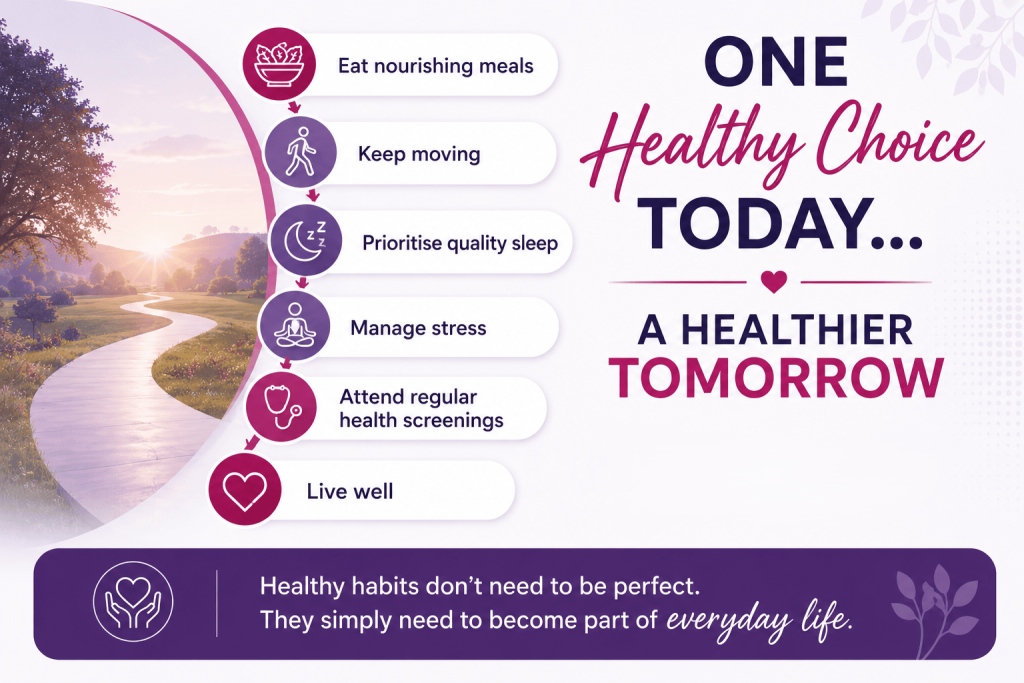
Improving your health doesn’t require changing everything overnight. The most successful lifestyle changes are usually the ones that are realistic enough to become part of your everyday routine.
Start by choosing one or two healthy habits that feel achievable, and build on them over time.
Every Day
- Choose balanced, nutritious meals.
- Drink enough water throughout the day.
- Find opportunities to move your body.
- Take your medication exactly as prescribed.
- Make time to rest and manage stress.
- Aim for seven to nine hours of quality sleep.
Every Month
- Monitor your blood pressure or blood glucose if recommended by your healthcare provider.
- Reflect on the healthy habits you’ve maintained and identify one area you’d like to improve.
- Replace one unhealthy habit with a healthier alternative.
Every Year
- Schedule your routine medical examination.
- Participate in workplace wellness screenings where available.
- Review your treatment plan with your healthcare provider and discuss any questions or concerns you may have.
Remember
Healthy living isn’t about getting everything right every day.
It’s about making better choices more often than not.
Those everyday decisions—repeated consistently over time—are what help protect your health and support your long-term wellbeing.
Prevention Protects Your Future Health
Many chronic conditions develop gradually, often without noticeable symptoms during the early stages.
That’s why preventative healthcare is so important.
Routine health assessments don’t simply identify existing conditions—they can also detect potential risks before they become more serious problems.
Whether you’ve already been diagnosed with hypertension or diabetes, or you’re looking to reduce your future risk, regular health monitoring gives you the information you need to make informed decisions about your wellbeing.
Knowing your numbers today may help prevent complications tomorrow.
Supporting Healthier People and Healthier Workplaces
At First Choice Occupational & Mobile Health, we believe healthier workplaces begin with healthier people. Through occupational medical examinations, medical surveillance, health risk assessments and workplace wellness programmes, we help organisations identify health risks early and support employees in maintaining their long-term wellbeing.
Whether you’re an employer looking to strengthen your workplace wellness programme or an employee wanting to better understand your health, our experienced team is here to provide professional, compassionate and evidence-based occupational health services.
Take the First Step Towards Better Health
If you’ve recently been diagnosed with hypertension or Type 2 diabetes, remember that you don’t have to face it alone.
With the right medical guidance, regular health monitoring and healthy lifestyle choices, it is possible to successfully manage these conditions while continuing to enjoy an active and fulfilling life.
At First Choice Occupational & Mobile Health, we’re committed to helping individuals and organisations build healthier futures through preventative healthcare, occupational medical services and workplace wellness programmes.
If you’d like to learn more about our occupational health services or workplace wellness solutions, contact our team today. Together, we can support healthier people, healthier workplaces and healthier communities.
Contact First Choice Occupational & Mobile Health
Book an Occupational Health Assessment or Workplace Wellness Consultation with us today.
Disclaimer
This guide is intended for general educational purposes only and should not replace professional medical advice, diagnosis or treatment. Always consult your healthcare provider regarding your individual health needs and before making significant changes to your treatment, diet or exercise routine.