Most of us make small decisions about our health every day without thinking too much about them. We decide whether to book that eye test, whether to wear the glasses we were prescribed, or whether taking our daily medication still matters when we are feeling perfectly well. Because nothing seems wrong at the time, it is easy to believe that these things can wait.
But feeling fine does not always mean that everything is fine. Some changes happen gradually, some conditions may not cause noticeable symptoms in the early stages, and some treatments are specifically intended to keep a health problem under control before it becomes more serious. This is particularly relevant when it comes to our eyesight, the glasses we wear and the medication we take on a regular basis.
Seeing Clearly Starts With Looking After Your Eyes
It is easy to assume that there is no reason to have your eyes tested if you can still see reasonably well. After all, if you can read your phone, drive and get through your day without a problem, what could an eye test possibly tell you?
Quite a lot. Your eyesight can change gradually, and because the change may
happen slowly, you can adapt without even realising it. You might start holding your phone further away, struggle to read smaller print, squint more often or develop headaches when concentrating. These changes can easily be blamed on tiredness, screen time or simply getting older.
An eye examination is not only about finding out whether you need glasses. Some eye conditions can develop without obvious symptoms. Glaucoma, for example, can damage the optic nerve and may cause permanent vision loss if it is not detected and managed. An eye examination can help detect problems before you notice changes yourself.
And then there is the famous carrot. We have all heard that eating carrots is good for your eyesight, and there is some truth behind the advice. Carrots contain beta carotene, which the body can convert into vitamin A, an important nutrient for normal eye function. However, a healthy diet supports healthy eyes; it does not correct refractive errors such as short-sightedness, long-sightedness or astigmatism. In other words, keep eating the carrots, but don’t expect them to replace an eye examination or a pair of properly prescribed glasses.
So, What About the Glasses Sitting in the Drawer?
An eye examination may be the first step, but for someone who has been prescribed glasses, looking after their eyesight does not end when the prescription is written. The lenses have been selected to correct a particular vision problem by helping light focus correctly on the retina, allowing you to see more clearly.
Yet many people still avoid wearing their glasses because they believe they don’t really need them all the time, or because they have heard that wearing glasses will make their eyes weaker. Properly prescribed glasses do not weaken your eyes or make them dependent on glasses. If your vision seems particularly blurry when you take them off after becoming accustomed to seeing clearly, it does not mean the glasses have made your eyes worse. You have simply become used to clearer vision.
Good vision can also be important at work, particularly in roles involving driving, machinery, tools or tasks that require accuracy and concentration.
That does not mean you should simply tolerate glasses that are uncomfortable or seem to be causing problems. If your glasses give you headaches, feel uncomfortable or no longer seem to provide the right level of vision, go back to your optometrist rather than leaving them in the drawer. Your prescription or the fit of your glasses may need to be checked.
The Same Thinking Applies to Chronic Medication
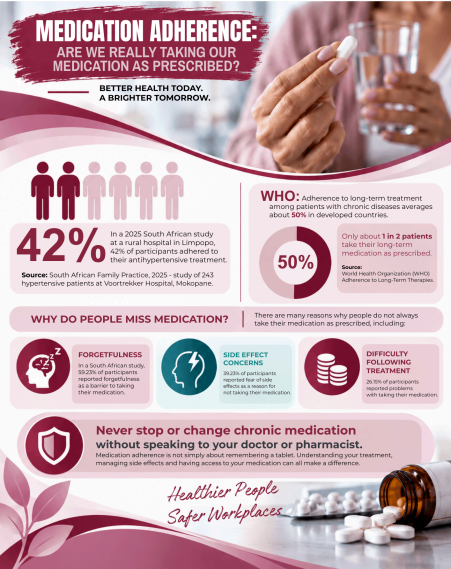
The idea of doing something even when you don’t feel that you need to may sound familiar when we look at chronic medication. There is an important difference between taking medicine for something temporary, such as a headache, and taking medication regularly to manage a long-term condition. With a headache, the result can be obvious: the pain goes away and you know why you took the medicine. With chronic medication, the benefit may be much less noticeable because the purpose is often to keep a condition controlled and reduce the risk of complications.
That can make long-term treatment surprisingly easy to take for granted. When you feel well, it can be tempting to think that perhaps you no longer need the medication. However, conditions such as diabetes, asthma, epilepsy and thyroid disorders may require ongoing treatment even when a person feels perfectly healthy. Stopping or changing prescribed medication without first discussing it with the healthcare professional managing your treatment can allow the underlying condition to become uncontrolled.
Taking medication as prescribed does not mean ignoring how you feel. If a medicine causes dizziness, makes you feel unwell or produces another concerning side effect, speak to your doctor or pharmacist rather than simply stopping the treatment. They can determine whether the dosage, timing or treatment needs to be reviewed. The same applies if you miss a dose. Because instructions differ between medicines, check the medication instructions or ask a healthcare professional what to do rather than automatically doubling the next dose.
Chronic medication is therefore about more than treating symptoms when they appear. It is about managing the condition over time and following the treatment plan agreed with your healthcare professional.
And Then There Is the Workplace
For people who spend a large part of their day at work, these everyday health choices
can become even more important. Good vision can affect everything from reading screens and instructions to driving, operating machinery, working with tools and carrying out tasks that require accuracy and concentration. Where a workplace presents hazards to the eyes, appropriate eye protection is also an important part of keeping employees safe.
Long-term health conditions and medication can be relevant in certain working environments too. An employee may need regular health monitoring or ongoing treatment, while side effects such as dizziness or drowsiness may be particularly important for someone working in a safety-sensitive role. The answer is not to ignore a health condition or stop necessary medication, but to make sure that health needs are properly understood and managed.
This is where occupational health plays an important role. Employee health does not exist separately from workplace safety. Appropriate occupational health support can help identify relevant health considerations and ensure that employees are supported in carrying out their work safely.
Small Choices Can Make a Bigger Difference
Looking after your health does not necessarily mean making dramatic changes or constantly worrying about what could go wrong. Often, it comes down to the ordinary things we are most likely to put off: booking an eye examination even though we think our eyesight is fine, wearing the glasses that have been prescribed for us, taking chronic medication as directed and asking questions when something does not feel right.
These choices may seem unrelated at first, but they all involve taking an active approach to your health. An eye examination can pick up changes you may not have noticed, prescribed glasses can help you see clearly, and taking chronic medication as directed can help keep a long-term condition under control.
Your health deserves attention not only when something goes wrong, but also while things are going right.
Your Health Matters — At Work and Beyond
At First Choice Occupational Health & Mobile, we believe occupational health is about more than responding when something goes wrong. A proactive approach to employee health can help organisations identify potential risks, support employee
wellbeing and contribute to safer, healthier workplaces.
From occupational health assessments and medical surveillance to workplace health support, the right occupational health approach can help businesses take employee health seriously. Because looking after people at work is not only about what happens when there is a problem — it is also about creating an environment where health, safety and prevention are taken seriously.
Your health matters — at work and beyond it